
Digital Patient Card
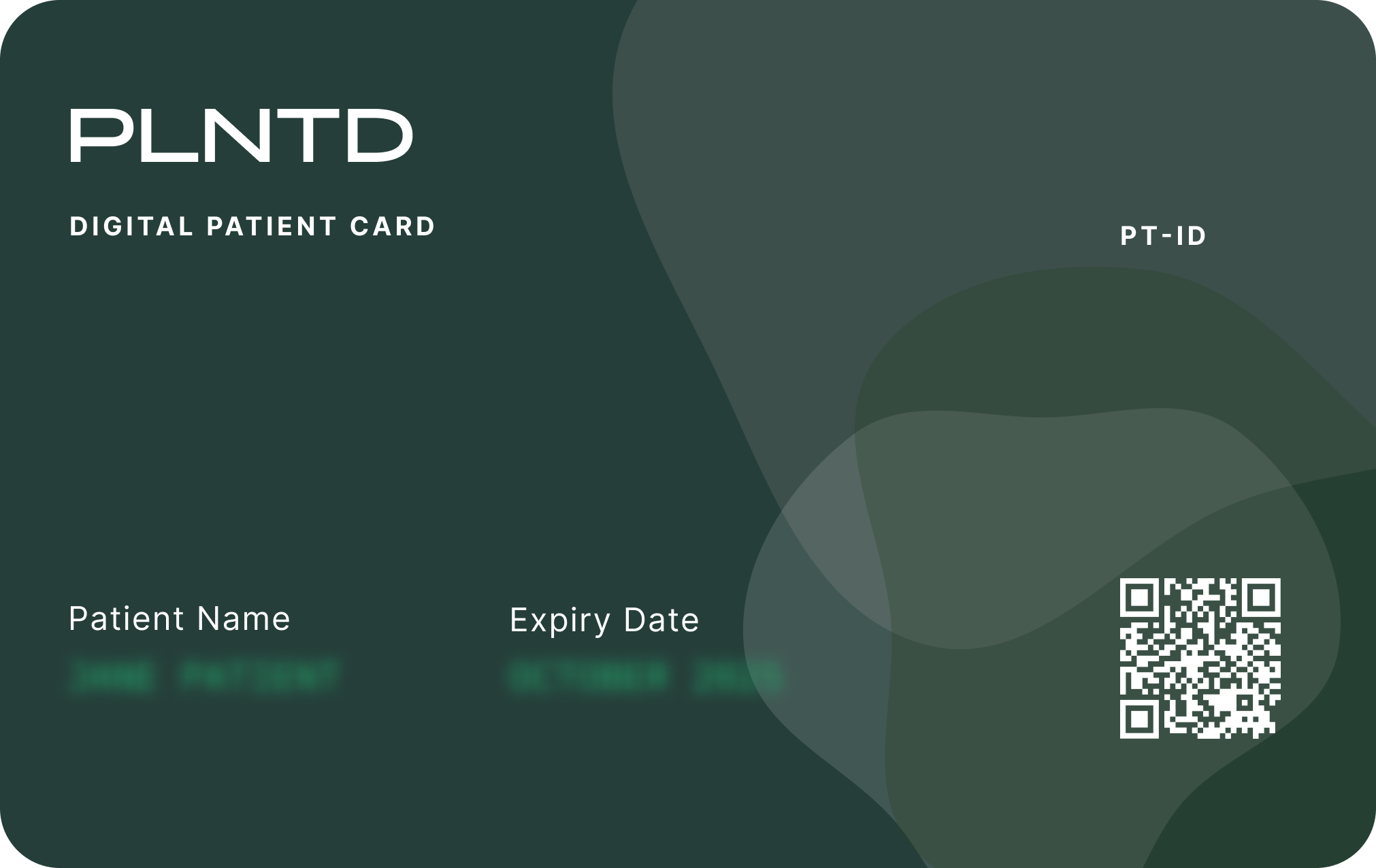
The Digital Patient Card is a secure, digital summary of your patient treatment care plan, accessible via your portal.
It provides a convenient reference of your active treatment status with PLNTD¹ and confirms that you have been assessed as meeting clinical eligibility criteria for specific therapeutic options.²
Digital Patient Resource
As certain prescribed treatments are classified as controlled substances in Australia, they must be managed in strict accordance with the law.³
This includes the requirement to hold a valid prescription issued by an AHPRA-registered healthcare professional.⁴
PLNTD provides the Digital Patient Card as a supportive reference tool for your individual care plan.⁵
Note: The Digital Patient Card is provided for informational purposes only and is not a legal permit or "license." Patients must comply with all state and territory legislation, including the requirement to maintain a current prescription and keep medication in its original pharmacy packaging with the dispensed label intact.⁶
Disclaimers
¹ All pricing cited across the PLNTD platform includes GST where applicable. The consultation fee is for the medical assessment only and does not include the cost of medication, nor does it guarantee the issuance of a prescription.
² "Eligibility" refers to a practitioner's clinical assessment of a patient's suitability for a treatment pathway based on their medical history and current health status.
³ Access to unregistered therapeutic goods is subject to TGA approval via the Special Access Scheme (SAS) or Authorised Prescriber (AP) scheme.
⁴ All medical consultations are conducted by independent AHPRA-registered health practitioners who exercise full clinical autonomy.
⁵ Therapeutic outcomes vary between individuals; specific results or "cures" are not guaranteed.
⁶ The Digital Patient Card is not an identity document or a legal authorization to carry controlled substances. Legal possession requires a valid prescription and adherence to the Drugs, Poisons and Controlled Substances Act 1981 (VIC) and equivalent state legislation.
⁷ Prescriptions are issued at the sole discretion of the treating doctor and only when clinically indicated as a suitable therapeutic option.
⁸ Unregistered medicines have not been evaluated by the TGA for safety, quality, or efficacy in the same way as medicines on the Australian Register of Therapeutic Goods (ARTG).
⁹ Patients are encouraged to consult their primary General Practitioner to ensure continuity of care.
Ready to take the next step?
Book a consultation today to discuss your treatment options with a registered healthcare professional.